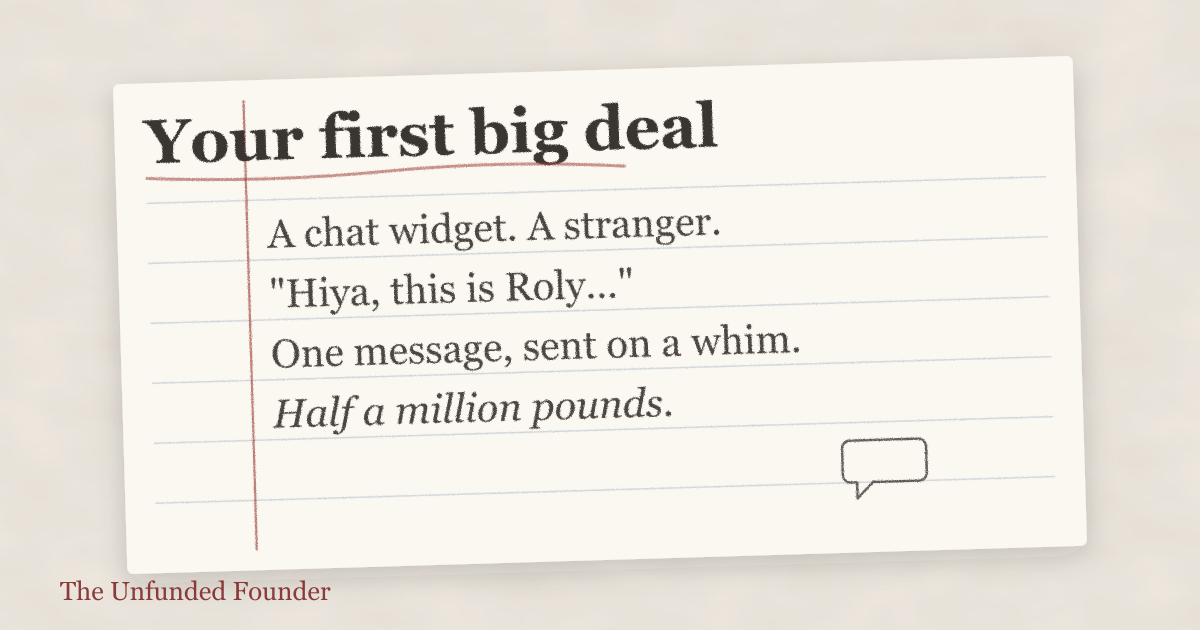
We used to have a Zendesk chat widget on our website. There was no AI. There were no automated responses or bots. We just used to keep it open in a tab, and when someone wanted to chat, it would ping and we would chat to someone. It was incredibly effective and a model I would return to even now.
I was gazing at this and I decided to send a message to an anonymous visitor who had looked at a few pages.
“Hiya, this is Roly from Appraisd. Just wanted to let you know I’m here to chat or answer any questions.”
A few seconds later, I got a reply.
“Hi. Yes, I would like a quote for 17,000 users, please.”
At this point, I think we had about five employees. Our biggest customer had about a thousand users. We’d barely heard of ISO27001, although I knew we were very good on information security and GDPR in general, thanks to the UK government’s Innovation Award initiative among other things.
They added, “We use Oracle. Can you connect with that?”
Oracle is something I had heard about when I was working in HR at Goldman Sachs back in the early 2000s. I had never logged in to it. There was certainly no documentation online. REST APIs were barely a thing. There were XML web services back then - and that’s if you’re lucky. There was no vendor marketplace.
The unnamed visitor was still waiting for my response. When you’re thrown the tiny seed of a huge opportunity like this, you obviously want to handle it with perfection.
What did I do? I asked a few more questions to get a bit of chat going and to prove that I was not a bot. Built up a tiny bit of authority.
I managed to arrange a phone call for later the same day. I said I’d need to ask a few more questions in order to be able to give a quote.
Six months later, we had won a contract worth half a million pounds. No public procurement process. Minimal IT due diligence. It was well and truly a whale and threatened to either transform our business or swamp our tiny boat completely.
The project had one major problem: our internal buyer and champion being made redundant 2 months after the launch to 17,000 people. It fizzled out. We couldn’t get hold of the right person on the client’s side despite them involving 40-50 stakeholders - far, far too many.
However, it enabled us to make product changes, develop new ways of working, and most importantly to understand how large organisations work that would benefit us for many years to come- and you, if we work together. All from just a pop-up chat on our website.